Imagine spending three weeks meticulously crafting a “perfect” 1,500 word LinkedIn article. You research the trends, you use high quality images, and you finally hit publish. You wait. Five hours later, you have three likes (one is from your mother) and zero inquiries.
Frustrated, you pivot. You spend the next day sending fifty cold Direct Messages (DMs) to potential prospects. By evening, two people have blocked you, ten have told you to stop spamming, and the rest ignored you entirely.
This is the “feast or famine” trap that swallows thousands of aspiring digital service providers in Lagos, Nairobi, London, and New York every single day. Whether you are a social media manager in Accra or a consultant in Dubai, the struggle is the same: you are working hard, but you aren’t working smart. You are stuck between two worlds without understanding how to navigate either. This brings us to the ultimate showdown: Inbound vs Direct Response Marketing: Which One Gets You Clients Faster?
Understanding these two forces is not just about “marketing” in the abstract sense. It is about leadership, influence, and positioning. If you cannot master the art of getting noticed, you cannot lead. If you cannot land clients, your vision dies in the ideation phase. Mastering the balance between these two strategies is the secret to building a sustainable, high income online presence.
How to Optimize Your Profile to Instantly Boost Your Online Credibility
Why Marketing Mastery is the Ultimate Leadership Skill
In the digital economy, your ability to attract attention and convert it into a professional relationship is your most valuable currency. For career professionals and entrepreneurs, marketing is not a “business function.” It is a leadership function.
- Authority and Positioning: High quality inbound marketing signals to the world that you are an expert. It shifts the power dynamic from “begging for work” to “being selected for excellence.”
- Income Security: Relying on one method of client acquisition is a risk. Understanding both inbound and direct response ensures that even if one channel dries up, your income remains steady.
- Influence and Reach: To lead a movement or a niche, you must understand how to move people to action. Direct response teaches you the psychology of human behavior, while inbound builds the trust necessary for long term loyalty.
- Efficiency: When you understand Inbound vs Direct Response Marketing: Which One Gets You Clients Faster, you stop wasting time on “busy work” and start focusing on high ROI activities.
How to Clean Up Your Social Media and Start Attracting Opportunities
3 Core Components of Modern Client Acquisition
To succeed as a digital service provider or creator, you must view your marketing through a structured lens. It is not enough to just “post content.” You need a framework.
-
The Magnetism of Inbound Marketing
Inbound marketing is the “long game.” It involves creating valuable content that pulls people toward you. Think of it as a library of your expertise. When a prospect searches for a solution to their problem, your content appears as the answer. This builds immense trust because the client discovered you on their terms.
-
The Precision of Direct Response
Direct response marketing is the “short game.” It is designed to evoke an immediate action. Whether it is an ad, a specific landing page, or a targeted outreach message, direct response asks for the sale or the lead right now. It is measurable, fast, and aggressive in its pursuit of results.
-
The Bridge of Authority Positioning
The bridge between these two is your personal brand. Without authority, your inbound content is ignored as “fluff,” and your direct response messages are treated as “spam.” Authority is the invisible force that makes both strategies work.
5 Essential Elements Every High-Converting Social Media Bio Must Have
Common Mistakes in the Inbound vs Direct Response Battle
Most beginners fail because they lean too heavily into one side or execute them poorly.
- The “Invisible Expert” Mistake: This person does 100% inbound. They post great tips every day but never actually ask for the business. They have thousands of followers but zero dollars in the bank.
- The “Spammy Salesman” Mistake: This person does 100% direct response. They jump into DMs with “Hey, do you need SEO services?” before even saying hello. They burn their reputation before they even build it.
- Lack of Consistency: Marketing is a momentum game. Many creators post for a week, see no “viral” results, and quit. According to HubSpot, consistency in content delivery is one of the highest predictors of inbound success.
- Ignoring the Data: If you don’t track which posts get inquiries and which DMs get replies, you are flying blind. Direct response, in particular, requires obsessive testing of headlines and offers.
How to Stand Out in a Crowded Market Without Spending Money on Ads
Real Life Scenarios: Inbound vs Direct Response in Action
Let’s look at five proven examples to see how these play out in the real world.
Example 1: The Freelance Graphic Designer
- Inbound: Posting a “Behind the Scenes” video of a logo redesign on TikTok, explaining the psychology of the colors used.
- Direct Response: Sending a personalized Loom video to a startup that just launched a messy website, showing them exactly three things they can fix today.
- The Result: The inbound video builds a waitlist over six months. The direct response video lands a $2,000 contract within 48 hours.
Example 2: The Leadership Coach
- Inbound: Writing a weekly newsletter on LinkedIn about “Navigating Corporate Politics in West African Tech Hubs.”
- Direct Response: Running a targeted Facebook ad for a free 45 minute “Leadership Audit” call.
- The Result: The newsletter builds a massive personal brand and speaking opportunities. The ad fills the coach’s calendar with immediate consulting prospects.
Example 3: The Social Media Manager (SMM)
- Inbound: Sharing client case studies showing a 300% growth in engagement.
- Direct Response: Commenting on a CEO’s post with a high value insight, then following up with a DM offering a specific content audit.
- The Result: High quality clients eventually find the SMM through the case studies (Inbound), but the SMM gets their first three anchor clients through strategic commenting (Direct Response).
A Note on Strategy: While you are weighing Inbound vs Direct Response Marketing: Which One Gets You Clients Faster, remember that the “fastest” way is almost always a combination of both. You need the speed of direct response to pay the bills today, and the compounding power of inbound to ensure you aren’t hunting for clients forever.
What Top Personal Brands Do Differently (And How You Can Apply It)
The Path to Mastery: Why You Need a Playbook
Most people treat social media like a lottery. They post and pray. But landing clients is a science, not a game of chance. Mastery requires a structured approach to how you present yourself, how you talk to prospects, and how you close deals.
If you are tired of the “hit or miss” nature of your online presence, it is time to move from “accidental creator” to “intentional magnet.” You need a system that handles your authority positioning while you sleep.
Introducing: The Client Magnet Playbook
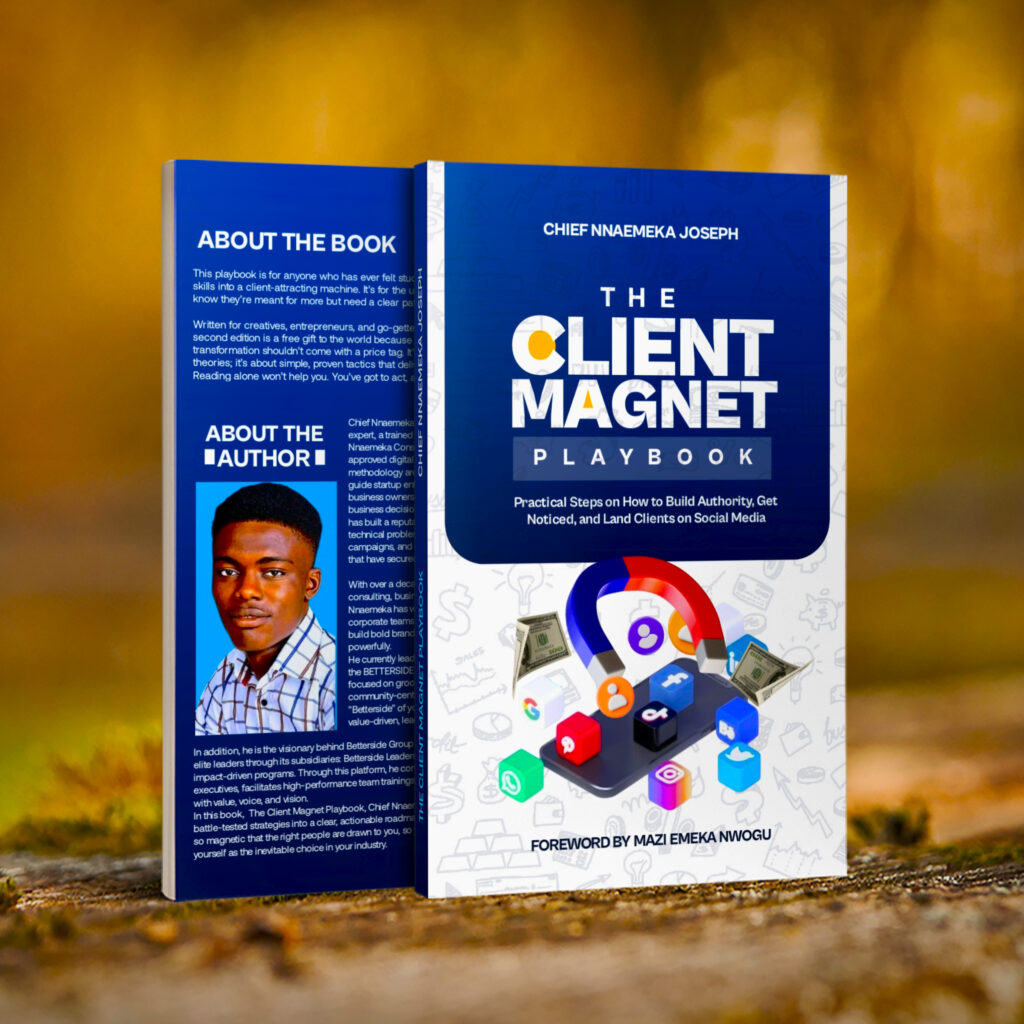
The most successful service providers don’t have “special talents.” They have a better system. The Client Magnet Playbook: Practical Steps on How to Build Authority, Get Noticed and Land Clients on Social Media was designed specifically for those who are tired of being the best kept secret in their industry. It provides the exact roadmap to balance the Inbound vs Direct Response equation.
5 Actionable Steps to Start Getting Clients Today
You don’t need to wait for a “perfect” moment to start. Here is how you can implement these strategies immediately:
-
Audit Your Digital Storefront
Your social media profile is your landing page. If a prospect clicks your name after seeing a post, do they know exactly what problem you solve? Ensure your bio follows the formula: I help [Target Audience] achieve [Desired Result] through [Your Service].
-
The 80/20 Content Split
Spend 80% of your time on “Inbound” content that educates and builds authority. Spend 20% on “Direct Response” content that tells people exactly how to hire you. Never assume people know you are for hire; tell them.
-
Identify Your “Dream 100”
Make a list of 100 people or companies you would love to work with. This is for your direct response strategy. Instead of cold pitching, start engaging with their content. When you finally reach out, you are a “familiar face,” not a stranger.
-
Solve a Small Problem for Free (Publicly)
Find a common pain point in your industry. Record a 2 minute video solving it. Post it. This is the ultimate inbound magnet because it proves your competence before a dollar is ever exchanged.
-
Transition to the Playbook
While these steps will get you started, you need a long-term strategy to scale. The nuances of high-ticket sales and psychological positioning are what separate the $500 freelancers from the $5,000 consultants.
Frequently Asked Questions (FAQ)
-
Between Inbound vs Direct Response Marketing, which one is better for beginners?
Direct response is usually better for beginners because it provides immediate feedback and can generate cash flow quickly. However, you should start your inbound efforts simultaneously so that you don’t remain a “cold caller” forever.
-
How long does inbound marketing take to show results?
Typically, inbound marketing takes 3 to 6 months of consistent posting to start generating organic leads. This is why it is critical to supplement it with direct outreach in the early stages of your business.
-
Can I land clients on social media without a large following?
Absolutely. High ticket clients care more about your authority and results than your follower count. Ten of the right followers (decision makers) are worth more than 10,000 random followers.
-
What is the biggest mistake people make in direct response?
Being too “me focused.” Most outreach fails because it focuses on what the sender wants (a job) rather than what the receiver needs (a solution). Always lead with value.
-
How do I build authority if I’m just starting out?
Authority is built by documenting your learning process, sharing your unique perspective, and showing the results you’ve achieved for yourself or for pro bono clients.
-
Is cold DMing considered direct response?
Yes, cold DMing is a form of direct response. However, it is the lowest form. A “warm” direct response, where you’ve already engaged with the person’s content, has a much higher conversion rate.
Conclusion: The Choice is Yours
When it comes to Inbound vs Direct Response Marketing: Which One Gets You Clients Faster, the answer is that direct response gets you a client today, but inbound gets you clients for a lifetime.
If you are a freelancer, a coach, or a career professional looking to dominate your niche, you cannot afford to choose just one. You need to become a “Client Magnet.” You need the leadership skills to command attention and the sales skills to close the deal.
The digital landscape is moving faster than ever. Those who rely on outdated “post and pray” methods will be left behind. Those who master the art of authority positioning will thrive.
Are you ready to stop chasing and start attracting? Grab your copy of The Client Magnet Playbook: Practical Steps on How to Build Authority, Get Noticed and Land Clients on Social Media and start building your empire today. Success is not an accident; it is a sequence of intentional actions. Take the first step now.